
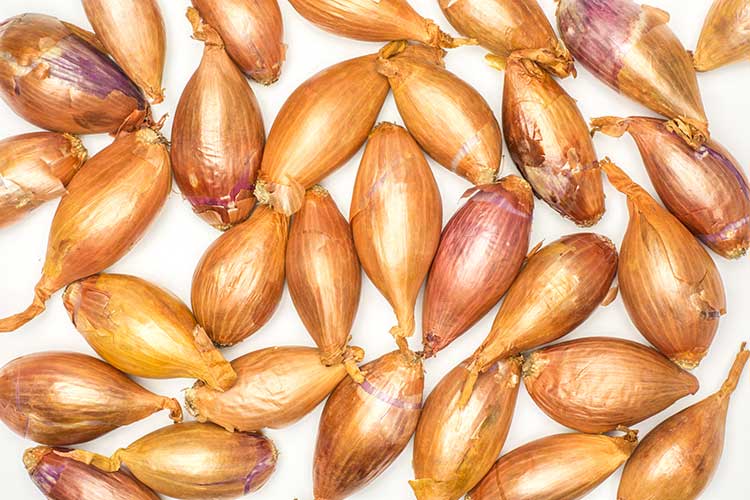
Shallots are a pro-kitchen staple that haven’t quite taken over in our at-home kitchens. We use them, but in general, our go-to allium is the yellow onion—the shallot’s sharper, spicier cousin—and sometimes they can even feel, even…performative in an ingredient list? Like they’re a special ingredient you have to go get when an onion would do.
And sure, an onion will almost always do just fine. But shallots are popular for a reason. First, they are mild compared to onions, with the same aromatic qualities but less of the punch. This delicate quality shines in otherwise simple dishes. They are also small, so if you need just a little, you aren’t sacrificing a leftover big onion to the back of the refrigerator.
But therein lies the shallots biggest PR problem. How many shallots is ONE shallot?
There are a few shallot varieties you’ll commonly find in grocery stores and farmers’ markets. They look like this:
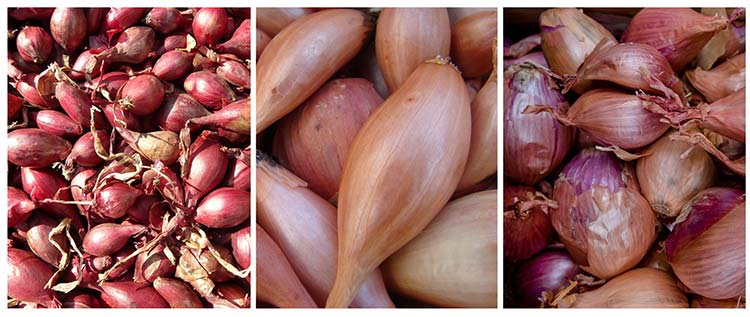
Flavor wise, grocery store shallots will be mostly interchangeable. Banana shallots are a little milder than red shallots, some may be slightly sweeter, but overall, pick the variety that looks the best (if you have a choice at all).
Some shallots will be sold as obvious single shallots. A clean teardrop or banana shape that you can trim and use just like an onion. Some shallots, though, come as little twins or triplets, with multiple peel-covered shallot bulbs within one larger shallot—sometimes bunched together within another peel.
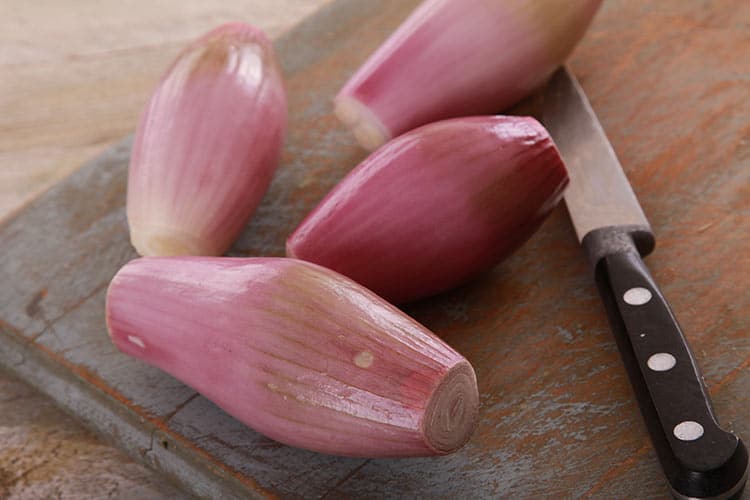
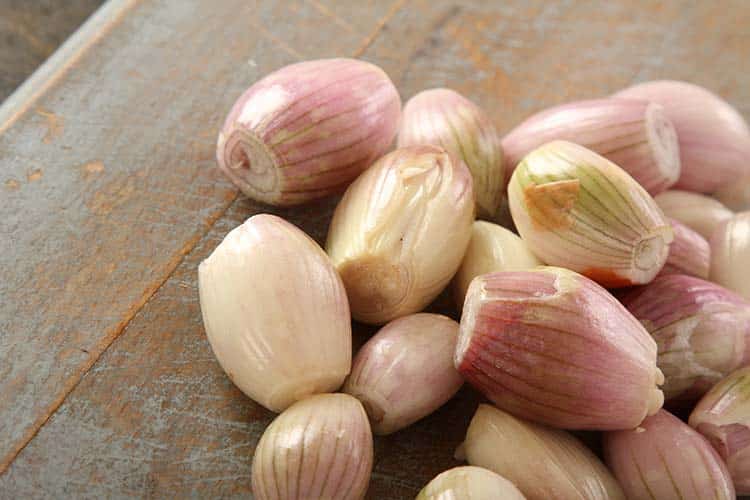
So when a recipe calls for one shallot, are you counting the whole shallot or the bulb? Like a lot of food questions, the first answer can and should be: it doesn’t really matter. If the quantity was essential, the recipe would call for the shallots by weight or a prepared volume, like 1/4 cup minced shallot. If it’s saying to use “1 shallot,” the recipe developer is not hugely concerned with the size or shape and knows that a little more or a little less won’t make a big difference.
That said, there is an answer. For the most part, we consider one wrapped piece as 1 shallot. Some shallots, once peeled, will have two little bulbs inside one wrapper, but they are often small and make up one bigger shallot. If you start to unpeel a shallot and find two individually wrapped bulbs, you have TWO shallots to work with.
Just like garlic, some bulbs are big and some are small, so use your judgement. An average medium-sized grocery store shallot will be about 3 inches long and less than 1 inch thick and will produce about 1/4 cup of small-diced shallots, so use that as a guide. But don’t overthink an otherwise simple thing.